Vicenza from Verona: Palladio’s Hometown, the Oldest Indoor Theatre, and a Stage Set Four Centuries Old
Twenty-five minutes east, the architect whose name became a style built his hometown into his portfolio — including the oldest surviving indoor theatre on earth, its original stage set still standing.
The short version
- Regional trains run Verona to Vicenza in 25–35 minutes at pocket fares on turn-up frequency (trenitalia.com), with the Corso Palladio beginning ten minutes from the station.
- Palladio is the city’s whole argument: Andrea Palladio built or reshaped palazzi, the Basilica, and the theatre here across the 16th century, the ensemble carries UNESCO listing, and ‘Palladian’ became the adjective every parliament and plantation house since has borrowed.
- The Teatro Olimpico (1580–85) is the alarm’s centerpiece: the oldest surviving indoor theatre anywhere — Palladio’s last design, opened just after his death — with Scamozzi’s stage set for the opening production still in place: seven streets of Thebes receding in forced-perspective trompe-l’oeil, the oldest surviving stage scenery in existence, entered on the civic museums ticket (museicivicivicenza.it).
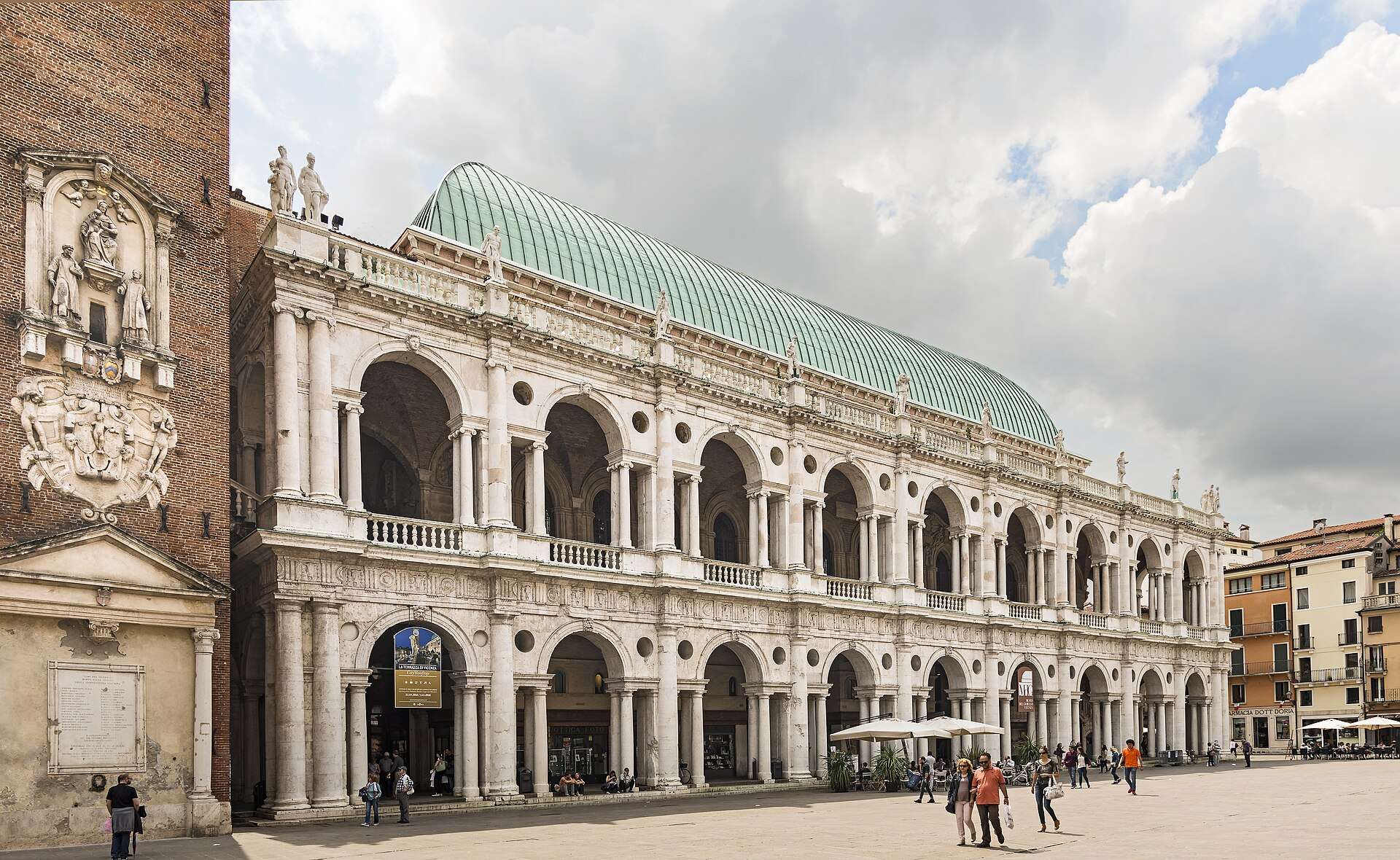
- The Basilica Palladiana anchors the center: Palladio’s double loggia wrapped around the medieval hall under its copper ship’s-hull roof, with the terrace bar in season and exhibitions inside.
- The villa pair per the alarm sits at the town’s edge, a pleasant walk or short ride: Villa La Rotonda — the domed villa copied across the planet, gardens open most days with interiors on limited ones — and Villa Valmarana ai Nani next door, its Tiepolo frescoes (father and son, room after room) and the dwarf statues of its name and legend.
- The table identity is baccalà alla vicentina: dried stockfish (not salt cod — the town enjoys the pedantry per the alarm) slow-cooked to cream with polenta, defended by its own confraternity, and the region’s grappa and Soave rounding the list.

Getting there
The train’s frequency makes this the Veneto’s easiest add — and the three-city corridor (Verona, Vicenza, Padua on one line) makes Vicenza the connoisseur’s middle stop most tourists skip past. The civic museums card bundles the theatre with the pinacoteca and pairs the day’s tickets into one decision. The villa walk (twenty-odd minutes southeast) wants the afternoon slot; La Rotonda’s interior days are limited and posted, so villa-committed travelers check before choosing the date.
The day
The Corso first: Palladio’s palazzi in parade formation, read facade by facade toward the Piazza dei Signori, where the Basilica’s loggias and the slender Torre Bissara set the town’s proportions. The Teatro Olimpico takes the late morning — enter, sit in the cavea, and let the eye argue with Scamozzi’s streets: plaster and wood pretending to be marble city blocks, the illusion built for one 1585 performance of Oedipus and never struck. The civic museum’s Palladio drawings extend the theme for the committed. Baccalà lunch lands mid-Corso. The afternoon walks out to the villas: La Rotonda’s dome and four identical porches from the garden paths, Valmarana’s Tiepolo rooms and the dwarfs on the wall, and the return stroll with the Berici hills behind. The evening train home is twenty-five minutes; Verona won’t notice you left.
When to go
The town works year-round — the theatre and Basilica are all-weather — with March through October opening the villas fullest (La Rotonda’s garden season, Valmarana’s full calendar). Summer brings performances inside the Olimpico itself: a booked seat under Scamozzi’s streets is the building doing its actual job, and the autumn classical cycle is the connoisseur’s date. Gold-fair weekends (the city’s jewelry trade runs major trade fairs) spike hotel prices without touching the day-tripper; midweek gives the theatre its emptiest, strangest best.
Frequently Asked Questions
Why is the Teatro Olimpico such a big deal?
It’s the Renaissance’s surviving proof-of-concept: the first permanent indoor theatre built since antiquity, designed by Palladio from Roman models, opened 1585 — and uniquely, its opening-night scenery never left. Scamozzi’s forced-perspective streets survive as the oldest stage set on earth. Everything from opera houses to multiplexes descends from this room.
Can you go inside La Rotonda?
The gardens open most of the week in season; the interior opens on limited posted days — check before committing, per the alarm’s if-the-day-allows clause. The exterior is the famous thing: the villa’s four identical temple fronts crowning its hill have been copied from Chiswick to Monticello, and the garden view delivers the architecture whole.
What’s the dwarf story at Villa Valmarana?
Stone dwarfs line the wall — legend ties them to a lonely dwarf princess kept from ever seeing normal-proportioned people, with the statues as her petrified court; the historical reading is 18th-century garden fashion. The Tiepolo frescoes inside are the substance: Giambattista’s mythologies and son Giandomenico’s peasant scenes, one villa holding both careers.
Stockfish or salt cod — does it matter?
To Vicenza, entirely: baccalà alla vicentina uses stoccafisso — air-dried Norwegian stockfish, never salted — beaten, soaked, and cooked slow in milk and oil to a cream served on polenta. The confraternity that guards the recipe will correct you gently, per the alarm. It’s the Veneto’s great slow dish and the town’s edible monument.
Vicenza or Mantua from Verona?
Mantua (documented on this network) for Gonzaga palaces and Mantegna’s painted rooms; Vicenza for Palladio and the theatre. Renaissance court versus Renaissance architect — both half-hour trains in opposite directions, and the honest Verona base does both on separate days.