Mantua from Verona: The 45-Minute Train, the Camera degli Sposi, and Palazzo Te’s Falling Giants
The Gonzagas built a court city on three lakes and hired the best painters alive. Verona is 45 minutes away and most visitors never make the transfer.
The short version
- Regional trains run Verona Porta Nuova to Mantova in about 45 minutes for a small unreserved fare; times at trenitalia.com.
- The Palazzo Ducale is a city inside the city — 500-plus rooms of Gonzaga ambition. Entry and the Camera degli Sposi’s capped slots at mantovaducale.beniculturali.it.
- The Camera degli Sposi itself — Mantegna’s frescoed cube with its ceiling oculus of faces looking down — is among the handful of rooms that changed European painting.
- Palazzo Te, the pleasure palace across town, holds Giulio Romano’s Sala dei Giganti: a room where the walls themselves collapse on the giants around you.
- Alberti’s Basilica of Sant’Andrea and the linked squares — Sordello, Erbe, the clock tower — make the walk between palaces its own attraction.
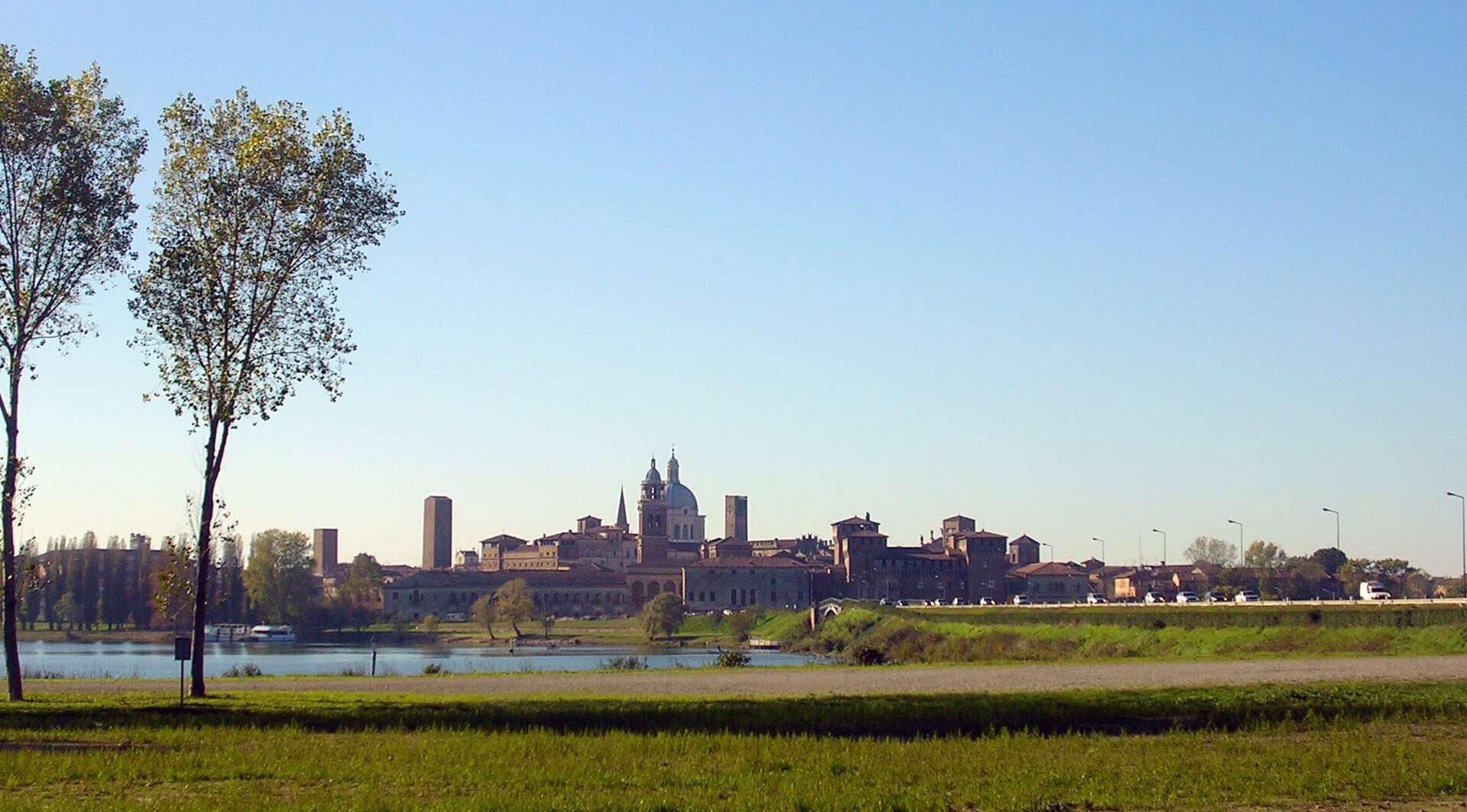
- Three lakes wrap the city on the flat Mincio; the waterfront path gives the skyline that explains why opera set designers keep borrowing Mantua.

Getting there
The Verona–Mantova regional runs roughly hourly, costs little, and needs no plan beyond validating the ticket. Mantova’s station sits ten minutes’ walk from the first square. The town is entirely flat — the Po plain insists on it — and the two palaces anchor opposite ends of a fifteen-minute walk through the center, which is the whole geography lesson.
The day
Take the Ducale first with your Camera degli Sposi slot inside it: the painted room justifies the trip in fifteen minutes, and the apartments, courtyards, and hanging gardens around it fill the morning. Lunch in the Erbe arcades — pumpkin tortelli is the local law and worth obeying — then cross town to Palazzo Te for Giulio Romano’s illusions, giants falling until the room seems structurally suspect. Close on the lakefront path as the light flattens gold across the water, and let an evening train take you back. Mantua after the day-trippers thin is one of northern Italy’s quietest pleasures.
When to go
Spring and early autumn are the walking seasons; summer on the plain runs hot and still, best handled with the palaces’ interiors as midday refuge. September brings the literature festival and full hotels — a day trip dodges the room problem while catching the buzz. Winter fog off the lakes turns the skyline into a Chinese scroll painting; the palaces stay open, the crowds do not exist, and the tortelli improves with the temperature. Mondays, per the alarm, are for Verona instead.
Frequently Asked Questions
Is Mantua worth leaving Verona for?
For painting, emphatically: the Camera degli Sposi and the Sala dei Giganti are two of the most influential rooms in Europe, 45 minutes from a city most people never leave. Verona keeps the romance economy; Mantua keeps the art.
Do I need to book anything?
The Camera degli Sposi slot, yes — capped numbers, timed entry, booked with the Ducale ticket. Palazzo Te sells calmly; trains need nothing.
What is the food obligation?
Tortelli di zucca — pumpkin pasta with amaretti and mostarda — plus sbrisolona crumble to finish. Mantua takes its Gonzaga-era kitchen seriously and prices it fairly.
Can I combine Mantua with anything?
Sabbioneta, the Gonzagas’ ideal city, shares a UNESCO listing and a bus connection for the ambitious. Realistically, Mantua’s two palaces plus the town fill the day properly on their own.
How does Mantua compare to Ferrara or Parma?
Same family of plain-city court towns, and Mantua has the best single rooms of the three. Art travelers rank it first; food travelers may argue for Parma and lose narrowly.